Quelle est la différence entre une couronne dentaire et un pont dentaire?
Are you considering restoring your oral health but hesitating between the different fixed dental care options available? Understanding your choices is the first step toward regaining chewing comfort and a smile appearance that feels right for you.
Preserving your natural teeth is at the heart of our priorities at Centres Dentaires Lapointe. When a tooth is weakened, a dental crown serves as a quality option to restore both the function and appearance of your smile.
Understanding Dental Crowns and Dental Bridges
During a visit to a dentist, it is common to be offered solutions such as a dental crown or bridge to address structural issues. These dental visits and treatments aim to stabilize your overall dentition while ensuring optimal functionality.
What is a Dental Crown?
A dental crown is a tooth-shaped hollow cap that covers a damaged or decayed natural tooth. Think of it as a “hat” that protects the tooth by restoring its shape, size, and strength. In our centres across Quebec, qualified professionals custom-manufacture each new crown to fit perfectly into your mouth.
Why Your Dentist May Recommend This Treatment
A dentist may suggest the placement of a crown in several clinical situations:
- Protection of a fragile tooth: Often necessary after a root canal treatment or significant tooth decay.
- Restoration of a broken tooth: To give a chipped, broken, or cracked tooth its original form.
- Appearance of your smile: To correct the colour or shape of a tooth for technical dental aesthetics.
- Support for a dental bridge: To replace a missing tooth by relying on adjacent teeth.
Definition and Function of a Dental Bridge
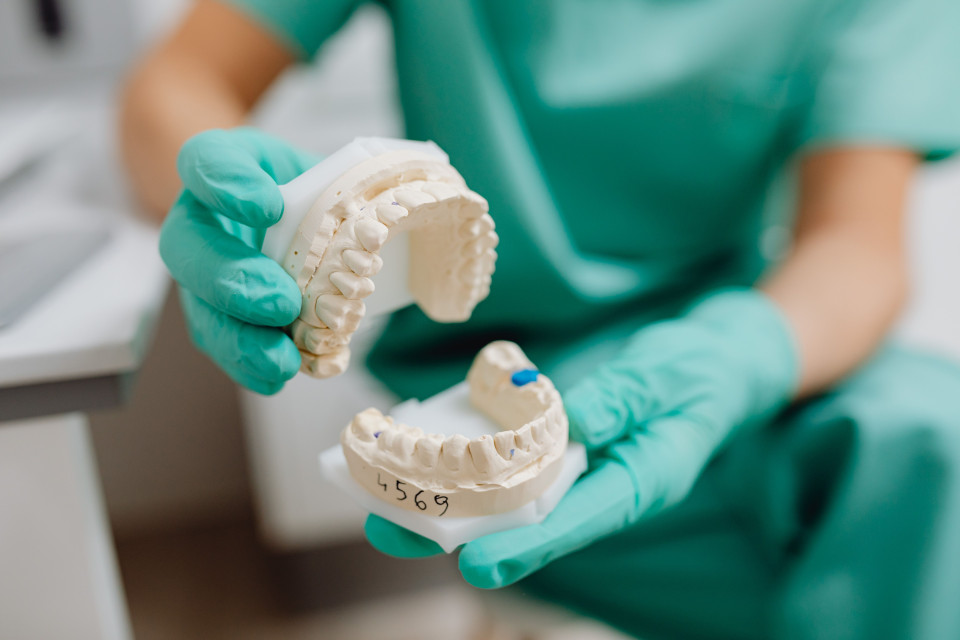
Unlike a single dental crown, a bridge is used for the replacement of missing teeth. It is a structure made up of several crowns manufactured and welded together. The healthy natural teeth located on either side of the empty space serve as anchors to support the crown units and the artificial tooth in the middle.
Structural Differences: Bridge vs. Dental Crown
While these two fixed prostheses are made from similar types of materials, their architecture and clinical utility differ. The distinction lies in the goal of the treatment and how the prosthesis integrates into your oral health strategy.
The Dental Crown: Individual Protection
- The dental crown acts as a protective envelope and covers the entire tooth.
- It requires a strong and healthy root canal or a natural root to serve as an anchor.
- This treatment is preferred for reinforcing a tooth weakened by decay or fracture.
- The crown covers all parts of the tooth visible above the gum line to restore function.
The Dental Bridge: A Replacement Solution
- Unlike a crown, a bridge is designed to replace a missing tooth.
- Its structure is composed of several crowns joined together to form a solid unit.
- The artificial tooth (the pontic) is suspended between two pillar crowns.
- A bridge relies on the neighbouring teeth, which often involves reshaping the tooth or teeth to the open space in order to support chewing forces.
Types of Materials Used in Dentistry
The type of crown chosen depends on the position of the tooth and your specific needs. Dental professionals will provide information on the best crown type for your situation during a consultation.
| Material | Benefits | Common Use |
| Ceramic crowns or porcelain crowns | Natural appearance, biocompatible | Front teeth (incisors, canines) |
| Metal crowns (e.g., gold) | High strength and durability; rarely chip or break | Back teeth (molars) |
| Porcelain-fused-to-metal crowns | Combine the strength of metal with the aesthetics of porcelain | Areas requiring high resistance |
| Resin crowns | Flexible option for a temporary crown | Temporary restorations |
| Zirconia crowns | High durability and natural appearance | Both front and back teeth |
The Step-by-Step Process of Getting a Crown Put In
The process of getting a crown or bridge put in usually takes place over two dental visits.
1. Examination and preparation
The dentist may first take X-rays to check the health of the root. Then, they reshape the tooth to make room for the crown. This step is essential to ensure that the crown in place does not alter your dental alignment.
2. Digital or physical impression
Once the tooth is prepared, the dentist will make an impression of your teeth to create a mould. This impression of your teeth is used to custom-manufacture the crown in a specialized dental lab.
3. The temporary crown
While the final crown is being produced (which usually takes two to three weeks), a temporary crown is placed. This protects the tooth and maintains function while the permanent crown is being prepared.
4. Final placement
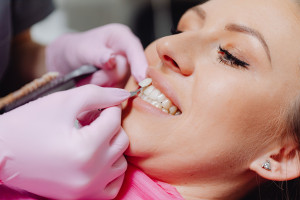
Once the new crown is ready, you return for the final crown placement. The dentist checks the fit, the shade of the porcelain, and your bite to ensure that you can withstand the biting and chewing forces.
Benefits for Your Well-Being and Oral Health
Choosing a quality dental crown provides lasting benefits that go beyond the appearance of your smile:
- restoration of effective and pain-free chewing;
- protection against further fractures of damaged teeth;
- maintenance of dental alignment by preventing teeth from shifting;
- improved speech and self-confidence.
In cases where the natural root cannot be saved, a dental implant may be used to serve as a base for a crown. This approach replaces a missing tooth while preserving the jawbone structure.
Why Choose Centres Dentaires Lapointe?
Founded in 1987, this Quebec family business groups health professionals under one roof. Today, it is a network of 30 centres which welcome approximately 63,000 patients annually. Choosing a dental centre from the Lapointe network means benefiting from recognized professional expertise in dentistry.
Our facilities integrate technologies to ensure diagnostics and treatments. We offer a range of services, including implantology, denturology, and general dentistry.
We offer financing options and payment plans tailored to different needs.
Maintaining Your Dental Crown or Bridge
Once your dental crown is in place, an oral hygiene routine is essential to ensure its longevity. While the artificial tooth itself cannot develop decay, the gum line and the natural teeth underneath remain vulnerable to bacteria.
1. Meticulous tooth brushing
Use a soft-bristled toothbrush to clean all the surfaces of the new crown gently but thoroughly. Brushing at least twice a day is the foundation of high-quality dental care. Pay special attention to the margin where the crown meets the gum, as this is where plaque tends to accumulate.
2. Flossing and interdental brushes
It is crucial to pass dental floss around the dental crown and especially under the dental bridge. For those with a bridge, hygienists often recommend using floss threaders or interdental brushes to reach the space between the artificial tooth (the pontic) and the gums. This prevents inflammation and maintains the health of your dentition.
3. Avoiding harmful habits
To protect the restoration, avoid biting down on hard objects such as pens, ice, or fingernails. If you experience bruxism (teeth grinding), speak to a dental professional about an occlusal splint. This appliance helps distribute chewing forces and prevents premature wear of your crowns.
4. Regular dental visits
Plan a visit to the dentist every six months for a professional cleaning and a complete examination. These dental visits allow the team to detect any potential issues before they get any worse, ensuring that your fixed prostheses remain functional and comfortable for years to come.
FAQ: Your Questions About Dental Crowns
It’s natural to have questions before starting a major treatment. Here are answers to some of the most common concerns.
Is the procedure for getting a crown put in painful?
The preparation of the tooth for a crown is performed under local anesthesia. Once the anesthesia wears off, you may experience temporary sensitivity in the gum or the treated tooth, which usually resolves within a few days.
What is the average lifespan of a crown or bridge?
A dental crown is designed to be a durable solution, with an average lifespan typically ranging from 10 to 15 years. Durability depends on the types of materials used as well as your individual chewing forces and maintenance.
Can these solutions improve the appearance of my smile?
While we primarily use the term “aesthetic” in a technical sense to describe restorative dental care, these treatments affect the appearance of your smile. Materials such as porcelain or ceramic allow us to replicate the translucency and shade of natural teeth. Each dental crown is custom-made to harmonize with your dentition.
What is the price of a dental crown or bridge in Quebec?
The cost of dental care in Quebec is guided by annual fee schedules, which undergo regular adjustments (an increase of approximately 3.4% is projected for 2026).
- For a dental crown: Depending on the type of crown (ceramic, zirconia, or metal alloy), the average price in Quebec generally ranges from $1,000 to $2,200 per tooth. This includes laboratory fabrication and placement by the dentist.
- For a dental bridge: Because a bridge replaces a missing tooth by anchoring to two pillar teeth, it typically consists of three units. The price for a traditional three-unit bridge can vary between $2,500 and $5,000.
Does CDCP cover dental crowns?
Yes, dental crowns are eligible for coverage under the Canadian Dental Care Plan (CDCP). This coverage is subject to specific conditions, including the clinical necessity of the procedure, a pre-authorization process, and established frequency limitations. Your dental professional will assess your oral health needs and submit the necessary pre-authorization request to the program to confirm eligibility for your specific situation.
Does CDCP cover dental bridges?
Dental bridges are also considered eligible services under the CDCP. Similar to crowns, the coverage is contingent upon pre-authorization and is subject to frequency limits defined by the program guidelines. We recommend consulting with your dental team to review your treatment plan and verify the coverage details specific to your dental needs.
Ready to Improve the Appearance of Your Smile?
Don’t let a damaged or decayed tooth affect your quality of life. Whether you need a crown to protect a fragile tooth or a bridge to replace one that is missing, the Lapointe team is here to propose quality solutions.
We invite you to find a centre near you among our 30 locations in Quebec. Book an appointment today for a consultation, and give your oral health the attention it deserves.
Does CDCP cover dental crowns?
Yes, dental crowns are eligible for coverage under the Canadian Dental Care Plan (CDCP). This coverage is subject to specific conditions, including the clinical necessity of the procedure, a pre-authorization process, and established frequency limitations. Your dental professional will assess your oral health needs and submit the necessary pre-authorization request to the program to confirm eligibility for your specific situation.
Does CDCP cover dental bridges?
Dental bridges are also considered eligible services under the CDCP. Similar to crowns, the coverage is contingent upon pre-authorization and is subject to frequency limits defined by the program guidelines. We recommend consulting with your dental team to review your treatment plan and verify the coverage details specific to your dental needs.